Key Takeaways
- Banning smartphones treats a symptom, not the cause—instead, channel mobile devices into just-in-time learning tools that deliver knowledge at the moment of need.
- Mobile devices can enable just-in-time learning at the exact moment knowledge is needed
- The goal isn't device control—it's making learning so valuable that employees choose to engage
Are mobile devices a drain on employee productivity or a beneficial tool that improves performance? The honest answer is: both. However, smartphone bans ignore how just-in-time learning and learning in the flow of work have fundamentally changed employee development. Mobile devices enable microlearning at the exact moment knowledge is needed.
This creates a real dilemma for managers—but the solution isn't prohibition.
Smartphone bans are becoming increasingly common in workplaces. The logic seems sound—remove the distraction, improve focus. But this "nuclear option" ignores a fundamental shift in how people work, learn, and access information. Rather than fighting against mobile devices, forward-thinking organizations are finding ways to make smartphones work for them.
The Productivity Case for Smartphones
Here's the counterintuitive truth: smartphones can actually improve workplace productivity.
When employees are easier to reach, colleagues get quick answers to urgent questions. A quick text message can resolve in seconds what might otherwise become a game of voicemail tag or waiting until you physically track someone down. Employees can chat with experts inside and outside the company, pull up real-time data, and track down missing details for time-sensitive decisions.
There's also a stress factor that often gets overlooked—one that affects knowledge retention as much as device policies. Today's reality is that families connect through smartphones. Parents who can't check their phones during a long workday worry about missing crucial messages from a child's school or daycare. Employees with elderly parents worry about emergencies. All this worry is itself a distraction—reducing focus and hurting performance. Many employees will surreptitiously check their phones anyway, or take extra breaks, further eroding both productivity and morale. Acknowledging this reality, rather than pretending it doesn't exist, leads to better outcomes for everyone.
Smartphones also serve as personal assistants—helping employees take notes, schedule meetings, quickly look up information through AI workflow assistants, and manage their day. Sure, they could use other tools. But people use their phones constantly in their personal lives for exactly these tasks. They're more comfortable—and therefore more efficient—getting things done on their phones.
When someone has a question or doesn't know how to do something, they pull out their phone and look for the answer. What they don't do is sign up for a one-hour seminar.
Modern AI knowledge management platforms and AI assistants are mobile-first for exactly this reason. They enable learning in the flow of work, meeting employees where they already are: on their smartphones. An employee waiting for their lunch order can spend two minutes in a microlearning session or getting an answer from an AI assistant grounded in company knowledge. That same employee might never open a laptop to do the same thing.
The question isn't whether your employees will use their phones at work. They will. The question is whether they'll use them to scroll social media—or to access the tools and knowledge that make them better at their jobs.
A Balanced Approach: Policies, Not Bans
Rather than the nuclear option of an all-out ban, treat your employees like the professional adults they are. The balanced approach is a well-considered smartphone use policy.
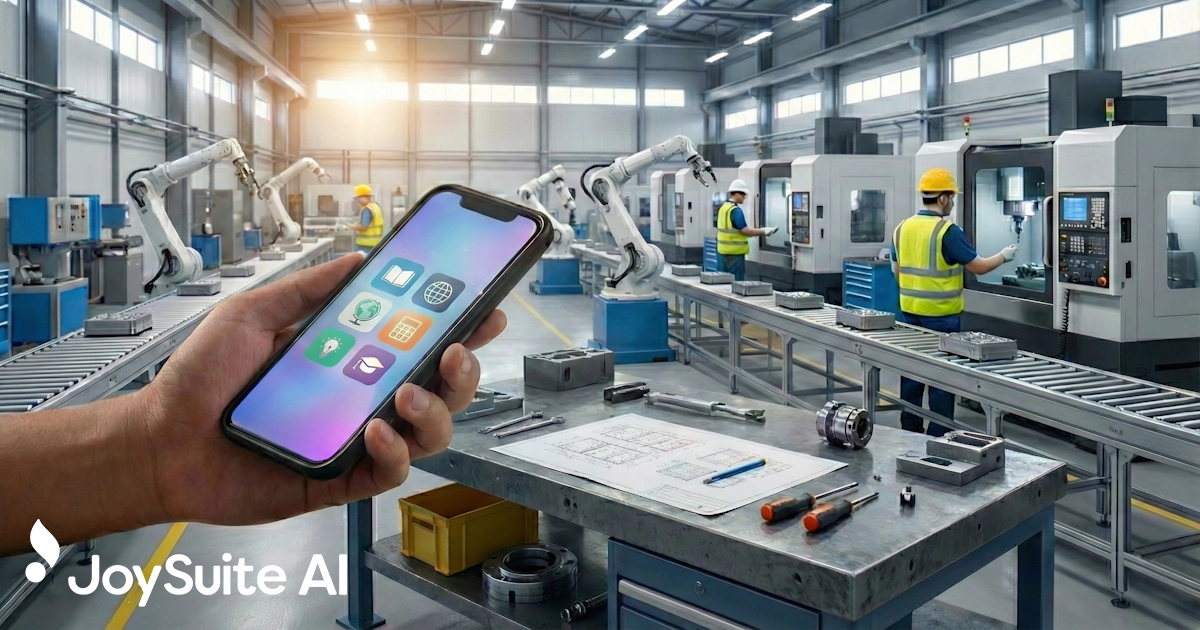
Safety-related restrictions make sense. Banning smartphone use on factory floors, in warehouses, while operating machinery, or while driving is a no-brainer. But even in those situations, allowing—even encouraging—beneficial use during breaks, at the start or end of shifts, or as a performance support tool makes sense.
Employees can absolutely be expected to silence phones during meetings and while serving customers. Policies that limit personal use during work time are reasonable. But this applies equally to any distraction—the issue isn't the device, it's the behavior.
Privacy and security deserve targeted attention too. Restricting smartphone cameras in certain areas protects employee privacy. Policies around what information can be accessed or discussed on personal devices protect the company. But these are targeted restrictions, not blanket bans.
And respect should go both ways. If you're going to set boundaries on when employees use their phones, set boundaries on when the company can contact them too. Don't expect that because workers can access email 24/7, they should. And ensure any restrictions are applied consistently—from the C-suite down.
Trust Your People
Smartphone bans are often a symptom of a trust problem, not a productivity problem.
You hired these people. You trust them to make decisions, serve customers, and represent your company. Why wouldn't you trust them to manage their own phone usage?
Rather than policing devices, keep an eye on outcomes. When smartphone use actually impairs someone's performance—when they're distracted, missing deadlines, or ignoring customers—address it directly. But don't let fear of what might happen prevent productive use of powerful tools.
The organizations getting the most from their people aren't the ones with the strictest phone policies. They're the ones providing tools worth using—tools employees want to pull out their phones to access.
When employees can access trusted answers on any device—including the smartphone in their pocket—mobile devices stop being distractions and start being just-in-time learning tools. JoySuite's AI assistant works seamlessly on mobile, turning quick knowledge lookups into moments of microlearning rather than trips to social media. Combined with bite-sized learning modules, smartphones become powerful tools for continuous development.