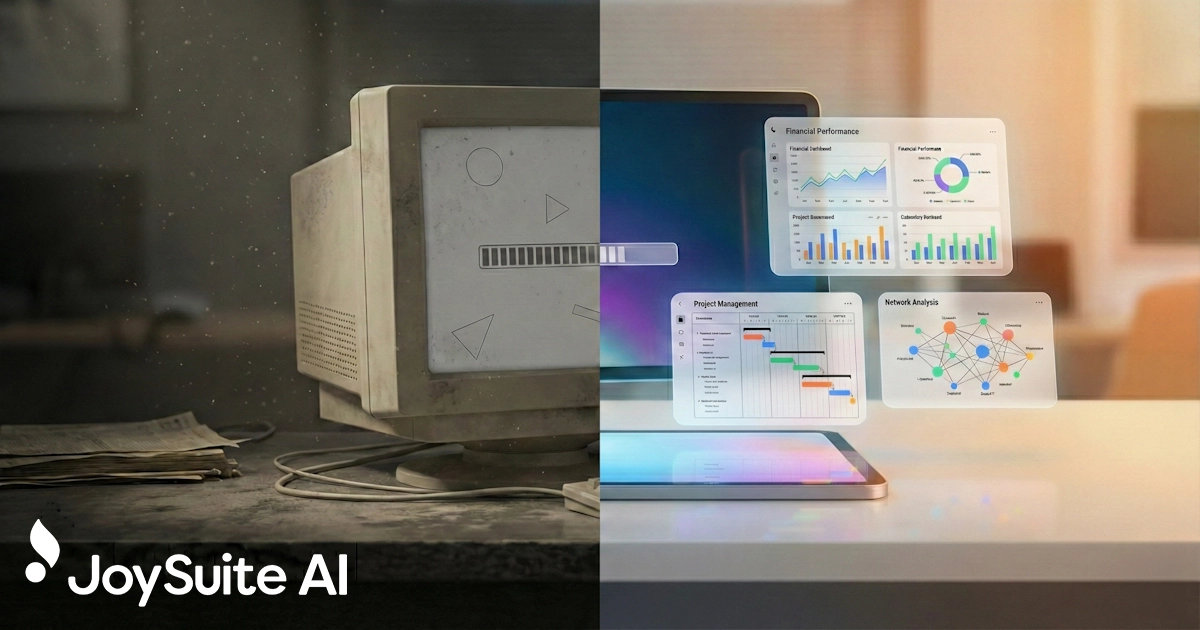
Key Takeaways
- Replace passive click-next courses with on-demand knowledge access, active practice, and real-world application that actually changes employee behavior.
- Effective training requires active engagement: application, practice, and real-world context
- The future of corporate training is on-demand knowledge access, not scheduled content consumption
Be honest: when was the last time you completed a compliance training and actually remembered what you learned a week later?
If you're like most employees, the answer is probably "never." And that's not your fault—it's the training's fault. Traditional click-next e-learning fails because it ignores how microlearning and adaptive learning actually work. For a deeper dive into this problem, see our guide on training verification beyond click-next. Instead of building real knowledge retention, these outdated approaches treat training as a checkbox exercise.
The Completion Rate Lie: Why Click-Next Training Fails
L&D teams love completion rates. They're easy to measure, easy to report, and they make executives feel good. "95% of employees completed cybersecurity training!"
However, completion rates measure one thing: who clicked through all the slides. They don't measure:
- Who actually read the content
- Who understood the material
- Who can apply it in their job
- Who will remember it next month
We've optimized for the wrong metric. Organizations invest millions in training that produces certificates but not competence.
What Effective Microlearning Actually Looks Like
Research on learning science has known for decades what actually builds skills. The principles are clear, yet most corporate training ignores them entirely.
Active Recall and Knowledge Retention
Testing yourself on material beats re-reading it by a factor of 3-4x. Yet most e-learning is passive consumption with a quiz at the end.
Source: Wikipedia: Testing EffectEffective microlearning, by contrast, embeds retrieval practice throughout the experience.
Spaced Repetition for Long-Term Memory
Learning something once and never revisiting it guarantees forgetting. Skills need reinforcement over time. Research consistently shows that spaced repetition dramatically outperforms massed practice for knowledge retention.
Contextual Practice Through Simulation
Reading about how to handle an angry customer isn't the same as practicing it. Simulation and roleplay build real capability because they require learners to apply knowledge in realistic situations.
Immediate Feedback Loops
Waiting until a quarterly review to learn you're doing something wrong means months of bad habits. Good training provides feedback in the moment, allowing learners to correct errors before they become ingrained.
The Adaptive Learning Alternative: AI-Powered Training
What if training could adapt to what each learner actually needs? This is where adaptive learning and AI training creation transform the landscape.
Modern adaptive learning platforms can:
- Generate quizzes that adapt to what you don't know
- Create realistic roleplays you can practice anytime
- Provide coaching feedback on your actual performance
- Deliver microlearning at optimal intervals for maximum retention
This isn't theoretical. AI training creation makes it possible to turn any document—a policy, a playbook, a product guide—into interactive learning experiences in minutes, not months. For practical guidance on creating better training content, explore how to design effective microlearning.
The Shift L&D Teams Need to Make
The future of corporate learning isn't better slides. It's AI-powered learning platforms and adaptive learning systems that fundamentally change the approach:
- From content creation to experience design—focusing on how people learn, not just what they need to learn
- From one-time events to continuous reinforcement—building systems that support ongoing skill development through spaced repetition
- From completion tracking to competency verification—measuring what people can actually do, not just what they clicked through
Start measuring what matters: track skill demonstration and behavior change, not just completion rates and time spent in training modules.
Why This Matters Now
The click-next era is ending. Organizations that continue relying on outdated e-learning will fall behind those embracing microlearning and adaptive learning.
The question isn't whether traditional training is ineffective—the research has proven that conclusively. The question is whether your organization will lead the change or be left behind as competitors build workforces that actually retain and apply what they learn.
JoySuite's Knowledge Coach transforms any document into conversational, AI-powered adaptive learning that verifies genuine understanding—not just completion. With adaptive quizzes, instant feedback, and true comprehension validation, your microlearning platform finally delivers measurable skills.