Key Takeaways
- Most manager development programs suffer from a "coaching gap": the disconnect between understanding concepts intellectually and applying them effectively
- Workshops provide knowledge, but coaching is a skill—and skills require practice to develop
- AI roleplay enables volume of practice that no manager or facilitator could provide
- The goal isn't to eliminate all discomfort—it's to build muscle memory so managers execute without overthinking
At some point, most managers attend a workshop on coaching. Maybe it's part of a leadership development program. Maybe it's a standalone session.
They learn frameworks—GROW model, active listening, powerful questions. They practice in pairs. They leave with handouts and good intentions.
Then they go back to their jobs, where they have thirty direct reports, back-to-back meetings, and a pile of their own work that isn't getting done.
The coaching frameworks gather dust. The conversations that were supposed to be developmental turn into quick check-ins or problem-solving sessions.
The gap between what they learned and what they do widens until the workshop might as well not have happened.
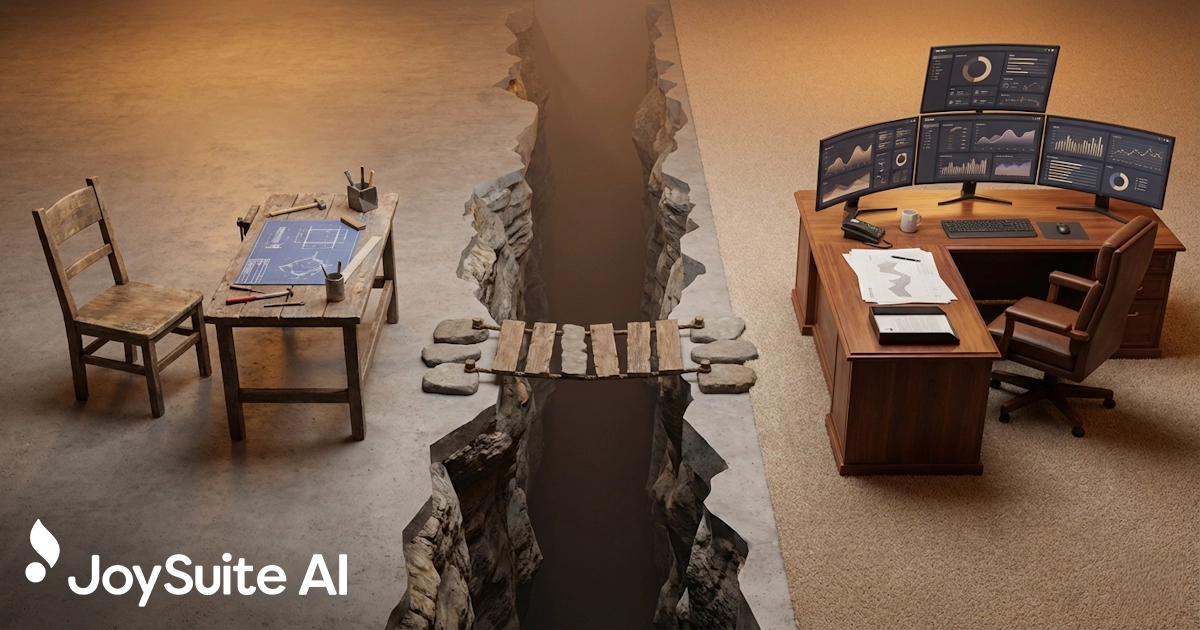
This is the coaching gap. Not a gap in knowledge—most managers know what good coaching looks like. A gap in practice. The distance between understanding coaching principles and actually coaching, consistently, in the messy reality of daily management.
Workshops aren't closing this gap. Something else has to.
Knowledge vs. Muscle Memory
The workshop model assumes that knowledge is the bottleneck. Teach managers what coaching is, give them frameworks and techniques, and they'll go do it.
But knowledge isn't really the problem. Ask most managers whether they should be having developmental conversations with their team, and they'll say yes. The concepts aren't mysterious.
What's missing is practice, feedback, and support in the moments that matter. Coaching is a skill, and skills require repetition to develop.
A two-day workshop might include a few role-plays, but that's not enough repetition to build fluency. Managers leave with intellectual understanding but not muscle memory. When they're in a real conversation and need to respond in the moment, they default to what's familiar—telling instead of asking, solving instead of developing.
The Missing Feedback Loop
Coaching also requires feedback to improve. In a workshop, you might get feedback from a facilitator or a peer. Back on the job, you're on your own.
Did that conversation go well? Were you actually coaching or just going through the motions? Without feedback, you can't calibrate. You might think you're coaching when you're not, or abandon effective approaches because they feel awkward.
And coaching requires support when you're stuck. Real coaching conversations don't follow the textbook. The employee says something unexpected. The situation is messier than any case study. You're not sure what to do next.
The Sports Analogy: The irony is that we know how to develop coaching skills. If you wanted someone to learn a sport, you wouldn't have them attend a two-day workshop and then expect them to perform. You'd have them practice regularly, with a coach providing feedback, building skills incrementally over time.
How Technology Is Changing the Equation
This is where things are starting to change. AI makes practice scalable in ways it wasn't before.
A manager can practice a coaching conversation—a difficult performance discussion, a career development talk, a feedback session—with AI playing the employee.
They can do it at 10 pm after the kids are in bed. They can run the same scenario five times, trying different approaches. They can get feedback on what worked and what didn't.
This doesn't replace learning from a skilled human coach. But it provides the volume of practice that workshops can't and that most organizations could never afford to provide through human facilitation.
Fighting the Forgetting Curve: Just-in-time support is also newly possible. A manager about to have a difficult conversation can quickly access guidance—not generic tips, but relevant approaches grounded in their organization's expectations. And ongoing reinforcement—brief scenarios that show up periodically—keeps skills developing over time.
The Role of the Workshop
None of this means workshops are useless. They have real value—understanding what actually makes learning effective helps put workshops in proper context.
Workshops create shared language. When everyone learns the same frameworks together, they can reference those frameworks in conversation.
Workshops provide concentrated learning time. Sometimes you need to step away from the day-to-day and focus on development. The immersive nature of a workshop creates that space.
Workshops build relationships. Learning together creates connection. The peer practice, the shared struggle, the vulnerability of trying something new in front of colleagues—these build bonds that matter.
The problem isn't the workshops themselves. It's relying on workshops alone to develop skills that require much more.
A Better Model for Development
A better model treats the workshop as a starting point, not the entire intervention. This shift is part of the broader transformation happening as AI reshapes L&D.
- Before: Assess where managers currently are. What do they already know? Where are they struggling? This makes the workshop time more targeted.
- During: The workshop introduces concepts, creates shared understanding, and provides initial practice. It's compressed because it's the beginning, not everything.
- After: Most of the development happens. Regular practice through AI roleplay. Just-in-time resources when managers face real situations. Periodic check-ins with a human coach for the complex cases. Spaced reinforcement to build retention. Peer groups that continue the conversation.
The Cost of the Gap
The stakes are higher than they might seem.
When managers can't coach, employees don't develop. They don't get the feedback and guidance they need to grow. They don't feel invested in. The best ones leave for managers who will develop them.
When managers can't coach, performance problems fester. The conversations that should happen early—correcting small issues before they become big ones—don't happen because managers don't know how to have them.
When managers can't coach, the organization's investment in people doesn't pay off. You hire talented people and then fail to develop that talent. The potential sits there, unrealized, because nobody's having the conversations that would unlock it.
Closing the gap requires being honest about what workshops can and can't do. They can introduce concepts. They can't build skills alone.
JoySuite helps managers develop coaching skills that stick. AI roleplay for practice on difficult conversations. Just-in-time guidance when they need it. Assessments that verify capability, not just attendance.