
Key Takeaways
- AI transforms onboarding from a scheduled, time-bound process into an on-demand experience where new hires get answers and learning when they need it.
- Self-service knowledge access eliminates the biggest onboarding bottleneck: waiting for someone to answer questions.
- AI-generated training content allows organizations to create role-specific onboarding materials in hours instead of weeks.
- The most successful AI onboarding implementations start with knowledge access before adding training automation.
- Measuring time-to-productivity—not just completion rates—reveals the true impact of AI on onboarding.
A new employee's first weeks set the trajectory for their entire tenure. Get onboarding right, and you've laid the foundation for engagement, productivity, and retention. Get it wrong, and you're fighting an uphill battle that often ends with a resignation letter.
Most organizations know this. Yet traditional onboarding remains stubbornly ineffective. New hires spend their first days drowning in information they won't remember, waiting for answers to basic questions, and sitting through training that wasn't designed for their specific role. They're eager to contribute but stuck in a holding pattern.
AI is changing this equation. Not by adding more technology to an already overwhelming experience, but by solving the fundamental problems that have plagued onboarding for decades: knowledge is inaccessible, training is generic, and new hires are dependent on busy colleagues who don't have time to help.
This guide explores how AI transforms employee onboarding—from self-service knowledge access to personalized learning paths—and how organizations are using it to cut ramp time dramatically while improving the new hire experience.
What Is the True Cost of Slow Employee Onboarding?
Slow onboarding costs organizations roughly $20,000 per hire in lost productivity during the ramp period, and employees with poor onboarding experiences are twice as likely to look for new opportunities.
Before exploring solutions, it's worth understanding what poor onboarding actually costs in detail. The numbers are significant enough that even modest improvements generate substantial returns.
The time it takes an average new hire to reach full productivity. Most organizations measure onboarding in days or weeks, missing the long tail of ramp-up time.
Source: GallupConsider the math for a single hire. If someone earning $80,000 per year operates at 50% productivity for their first six months, that's $20,000 in lost productivity before they're fully contributing. Multiply that across every hire, and onboarding efficiency becomes a strategic financial lever.
But the costs extend beyond productivity. Gallup research shows that employees who have a poor onboarding experience are twice as likely to look for new opportunities. Given that replacing an employee costs 50-200% of their annual salary, every departure linked to bad onboarding represents a massive avoidable expense.
Then there's the hidden cost of distraction. Every question a new hire asks someone else is an interruption—the "ask Sarah" problem that drains productivity from your experienced employees. The informal knowledge transfer that seems free actually carries significant organizational cost.
How long does it take new hires in your organization to become fully productive? How do you know?
Why Traditional Onboarding Falls Short
Traditional onboarding follows a familiar pattern: orientation sessions, benefits enrollment, compliance training, and a stack of documents to review. The new hire is assigned a buddy, given system access, and expected to ramp up through a combination of formal training and informal learning.
This model has fundamental problems that can't be fixed with better scheduling or more comprehensive checklists.
The Information Dump Problem
New hires receive massive amounts of information in their first days—far more than anyone can retain. Research on learning retention shows that people forget 70% of new information within 24 hours without reinforcement. Traditional onboarding ignores this reality, front-loading everything and hoping some of it sticks.
The result is predictable: new employees nod along during orientation, then can't remember what they learned when they actually need it. They ask colleagues for information they were already given, creating frustration on both sides.
The Waiting Problem
New hires have questions constantly. How do I submit expenses? What's the policy on remote work? Where do I find the brand guidelines? Who approves purchase requests?
In traditional onboarding, every question requires finding someone who knows the answer—and waiting for them to be available. This creates dependency chains where productivity is gated by other people's calendars. A new hire might wait hours or days for a simple answer, losing momentum and confidence.
A typical scenario: A new marketing hire needs to understand the brand voice guidelines for a project. She searches the company wiki, finds three different documents with conflicting information, and doesn't know which is current. She messages her manager, who is in meetings until 3pm. She asks a colleague, who points her to a different folder. By the time she gets a definitive answer, half her day is gone—and she's learned that finding information here is painful.
The One-Size-Fits-All Problem
A new software engineer and a new sales representative have vastly different onboarding needs. Yet most organizations deliver the same orientation, the same compliance training, and the same "welcome to the company" content to everyone.
Role-specific training often exists, but it's created sporadically, maintained poorly, and delivered whenever someone has time. The result is that new hires receive generic content that doesn't address their actual questions and role-specific guidance that may be incomplete or outdated.
The Measurement Problem
Organizations track onboarding completion rates—whether someone finished the required training. But completion doesn't equal competence. Someone can complete every module and still not know how to do their job.
Time-to-productivity is the metric that matters, but most organizations don't measure it systematically. They can't answer basic questions: How long until a new hire handles their first customer call without help? When can they work independently on a project? What predicts faster ramp-up?
How AI Transforms the Onboarding Experience
AI addresses onboarding challenges at their root, not by automating the broken process but by enabling a fundamentally different approach.
From Scheduled to On-Demand
Traditional onboarding is calendar-driven. Orientation happens on day one. Benefits enrollment happens in week one. Training is scheduled when L&D can deliver it.
AI enables on-demand onboarding. New hires access information when they need it, not when someone schedules it. Learning happens at the moment of need, when motivation and retention are highest. The artificial constraints of scheduled sessions disappear.
This doesn't mean abandoning structure. The 30-60-90 day framework still provides valuable milestones. But within that structure, AI enables flexibility that matches how people actually learn and work.
From Waiting to Instant Answers
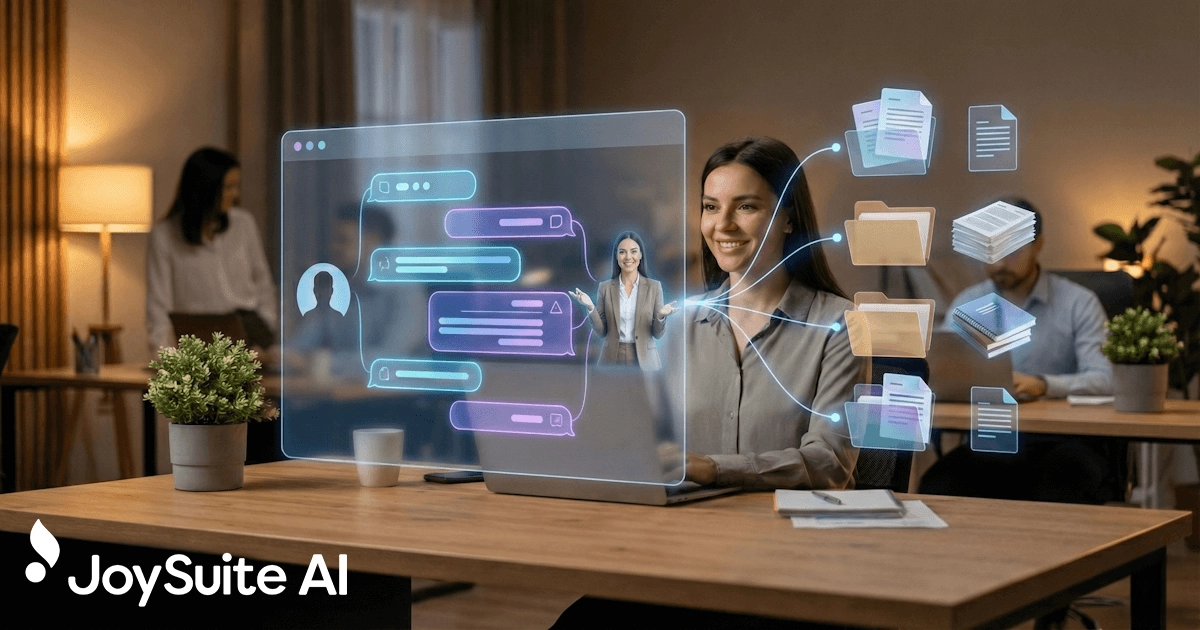
The biggest transformation AI enables is self-service knowledge access. Instead of hunting through documents or waiting for colleagues, new hires can simply ask questions and get instant answers.
What this looks like in practice: A new hire types "What's the process for getting a corporate credit card?" and receives an immediate, accurate answer drawn from your actual policies—with a link to the source document if they want more detail. No waiting. No hunting. No interrupting a colleague.
This capability, powered by retrieval-augmented generation (RAG), connects AI to your organization's actual content. The AI doesn't make things up—it finds and synthesizes information from your policies, procedures, and documentation.
The impact is dramatic. Questions that used to require finding the right person, waiting for their availability, and hoping they know the answer are now resolved in seconds. New hires feel supported and capable. Experienced employees aren't constantly interrupted. The entire organization moves faster.
From Generic to Personalized
AI enables personalization that would be impossible to deliver manually. Consider what becomes possible:
Role-based learning paths. A new sales rep receives training focused on your products, sales process, and CRM. A new engineer receives training on your development practices, codebase, and deployment procedures. Same company, different experiences tailored to what each person actually needs.
Adaptive pacing. Someone with industry experience might breeze through foundational content and dive quickly into company-specific material. A career-changer might need more background before tackling role-specific training. AI can adjust the pace and depth based on demonstrated understanding.
Contextual recommendations. Based on a new hire's questions and activities, AI can suggest relevant content: "Since you're working on a customer proposal, you might find these case studies helpful." Learning becomes integrated with work rather than separate from it.
From Scattered to Coherent
Most organizations have onboarding information scattered across multiple systems: HRIS for policies, SharePoint for procedures, Confluence for team documentation, Slack for tribal knowledge. New hires don't know where to look, and often the same information exists in multiple places with conflicting versions.
AI can unify this fragmented landscape. By connecting to multiple sources, an AI knowledge assistant provides a single point of access. The new hire doesn't need to know whether the answer lives in SharePoint or Confluence—they just ask the question.
What Is Self-Service Onboarding and Why Does It Matter?
Self-service onboarding gives new hires instant access to answers through an AI knowledge assistant, eliminating the biggest bottleneck—waiting for someone to respond to questions—while freeing experienced employees from constant interruptions.
If you could only implement one AI capability for onboarding, choose self-service knowledge access. It addresses the most universal pain point—waiting for answers—and creates immediate value.
What Self-Service Enables
Self-service onboarding means new hires can resolve most of their questions independently. They're not helpless; they have a reliable way to find accurate information when they need it.
This changes the dynamic fundamentally. Instead of feeling dependent and unsure, new hires feel capable and supported. Instead of interrupting colleagues constantly, they preserve those interactions for questions that genuinely require human judgment.
The first 48 hours set the tone. When a new hire can get their questions answered instantly from day one, the message is clear: this organization has its act together, and you have what you need to succeed.
Building the Knowledge Foundation
Self-service only works if the knowledge exists and is accessible. This requires upfront work—but it's work that benefits everyone, not just new hires.
Audit existing content. What documentation exists? Where does it live? Is it current? A knowledge audit identifies gaps and inconsistencies before they confuse new employees.
Prioritize high-frequency questions. What do new hires ask most often? These questions should have clear, accurate answers in your knowledge base. Common categories include: benefits and policies, systems and access, processes and approvals, team structure and contacts, and role-specific procedures.
Connect to source systems. An AI assistant is only as good as the content it can access. Use universal connectors to bring together information from HR systems, document repositories, wikis, and other sources.
The Human Complement
Self-service doesn't mean abandoning human connection. Remote onboarding research shows that social connection is the strongest predictor of new hire retention.
The goal is to reserve human interaction for what humans do best: building relationships, providing context, offering judgment, and helping new employees feel like they belong. AI handles the routine questions; people handle the meaningful conversations.
The best onboarding programs use AI to amplify human connection, not replace it. When managers aren't constantly answering "where do I find..." questions, they have more time for conversations about career growth, team dynamics, and the work itself.
How Does AI Transform Training for New Hires?
AI changes the economics of training creation, enabling role-specific onboarding materials in hours instead of weeks while adapting learning to each individual's existing knowledge and pace.
Beyond knowledge access, AI is transforming how organizations create and deliver onboarding training.
Creating Training Content at Speed
Traditional training development is slow. Creating a single course might take weeks or months of instructional design work. The result is that training is often outdated before it's delivered, and role-specific content doesn't exist because nobody has time to create it.
AI changes the economics of content creation. Documents, procedures, and existing knowledge can be transformed into training materials in hours instead of weeks. This makes role-specific onboarding training feasible for the first time in most organizations.
Imagine creating a tailored onboarding track for your customer success team—covering your products, support processes, and customer communication standards—in an afternoon instead of a quarter. That's the shift AI enables.
Learning That Adapts
Static training treats all learners the same way. AI-powered learning adapts to individual needs:
- Identifying knowledge gaps through assessments and adjusting content accordingly
- Providing additional practice on concepts someone struggles with
- Accelerating past material someone has already mastered
- Recommending next steps based on demonstrated competence
This adaptive approach respects the new hire's time while ensuring they develop necessary competencies.
Practice and Application
Beyond information delivery, AI enables practice at scale. New sales reps can practice objection handling with AI-powered roleplay before facing real customers. New managers can practice difficult conversations. New support agents can handle simulated customer issues.
This practice opportunity—historically limited by the availability of trainers or coaches—becomes available on demand. New hires build confidence through repetition before the stakes are real.
How Do You Measure Onboarding Time to Productivity?
Measure time to productivity through outcome-based metrics—time to first independent task, time to standard output level, and decreasing question volume—rather than training completion rates that don't indicate actual competence.
Effective measurement is essential for understanding whether AI onboarding is working and where to improve.
Moving Beyond Completion Rates
Training completion tells you someone finished modules. It doesn't tell you whether they learned anything useful or can apply it to their job.
Better metrics focus on outcomes:
- Time to first independent task: How long until the new hire completes meaningful work without hand-holding?
- Time to standard productivity: When do they reach the output level of an average team member?
- Time to full productivity: When do they reach the level of a fully ramped employee?
- Question volume over time: Does the frequency of questions decrease appropriately as onboarding progresses?
- Error rates: Are new hires making fewer mistakes as they ramp up?
Establishing Baselines
Before implementing AI onboarding, establish baselines for your current state. How long does ramp-up currently take? What do new hires struggle with most? Where do delays occur?
This baseline enables you to measure improvement. Without it, you're guessing about impact.
Organizations using AI-powered onboarding report reducing time to productivity by up to 50%, primarily through self-service knowledge access and personalized learning paths.
(Estimated based on early adopter reports)Continuous Improvement Signals
AI systems generate data that enables ongoing improvement:
- Common questions: What do new hires ask most often? These are knowledge gaps or documentation failures to address.
- Unanswered questions: Where does the AI fail to help? These are content gaps to fill.
- Training struggles: Where do new hires get stuck? These are instructional design problems to solve.
- Satisfaction feedback: How do new hires rate their onboarding experience? What suggestions do they have?
This data creates a feedback loop: identify problems, improve content, measure results, repeat.
How Do You Implement AI Employee Onboarding?
Implement AI onboarding in four phases: enable self-service knowledge access first (weeks 1–4), improve content quality based on feedback (weeks 5–8), add AI-powered training (weeks 9–12), then measure and optimize continuously.
Transforming onboarding with AI is a journey, not a single project. Here's a practical path forward.
Phase 1: Enable Self-Service Knowledge (Weeks 1-4)
Start with the highest-impact capability: giving new hires instant access to answers.
- Audit current knowledge. Identify where onboarding information lives today and assess quality.
- Fill critical gaps. Ensure answers exist for the most common new hire questions: policies, benefits, systems access, and basic procedures.
- Deploy an AI assistant. Connect it to your knowledge sources and configure it for onboarding use cases.
- Gather feedback. Have new hires use the system and report what works and what's missing.
This phase delivers immediate value while building the foundation for more advanced capabilities.
Phase 2: Improve Content Quality (Weeks 5-8)
Based on Phase 1 feedback, enhance your knowledge base:
- Fill gaps identified by unanswered questions
- Clarify content that generated follow-up questions
- Remove or update outdated information
- Add role-specific content for common positions
The AI system reveals exactly where your documentation falls short—information that was previously invisible.
Phase 3: Add AI-Powered Training (Weeks 9-12)
With knowledge access working, extend to training content:
- Convert existing documentation into training modules
- Create role-specific onboarding tracks
- Build assessments to verify understanding
- Enable adaptive learning paths based on demonstrated knowledge
Phase 4: Measure and Optimize (Ongoing)
Establish your measurement framework and begin tracking outcomes:
- Set time-to-productivity baselines and targets
- Monitor AI usage and satisfaction
- Identify improvement opportunities from data
- Iterate on content and process based on results
Common mistake: Trying to automate everything at once. Start with knowledge access, prove value, then expand. Organizations that attempt comprehensive AI onboarding from day one often stall in implementation complexity.
The Human Element in AI Onboarding
AI handles information and routine tasks well. It handles human connection poorly. Effective AI onboarding preserves and enhances the human elements that matter most.
What to Keep Human
Manager relationships. The relationship between a new hire and their manager is the foundation of employee experience. AI should free managers from answering routine questions so they can focus on coaching, feedback, and development conversations.
Team connections. New hires need to feel like they belong. Team introductions, social interactions, and collaborative work create bonds that AI cannot replicate. As remote onboarding research shows, these connections require deliberate effort.
Judgment and nuance. Some questions don't have clear policy answers. "How should I handle this difficult client situation?" requires human judgment, context, and experience. AI can surface relevant precedents, but humans provide wisdom.
Culture transmission. Organizational culture is absorbed through observation and interaction. AI can explain stated values; humans demonstrate lived values through their behavior.
How AI Amplifies Human Connection
Counterintuitively, AI can strengthen human elements of onboarding by removing friction from routine interactions:
- When new hires don't need to interrupt colleagues for basic questions, those colleagues have more time for meaningful mentoring
- When managers aren't answering "where do I find..." questions, they can focus on career conversations
- When routine training is handled efficiently, there's more time for collaborative learning experiences
- When new hires feel capable and supported by AI tools, their human interactions are more confident and productive
Getting Started
Transforming onboarding with AI doesn't require a massive initiative or a complete process overhaul. Start with the highest-impact opportunity: giving new hires instant access to the answers they need.
Audit your current state. Talk to recent hires about their experience. Identify the questions they asked most often and the information that was hardest to find. That's your starting point.
The goal isn't to replace human onboarding with AI onboarding. It's to use AI to eliminate the friction, waiting, and frustration that prevent new hires from ramping up quickly—so that human interaction can focus on what humans do best.
When new employees can get answers instantly, learn at their own pace, and access training designed for their specific role, they stop feeling like they're in a holding pattern. They start contributing faster. They feel supported rather than stranded. And they're far more likely to stay.
That's the promise of AI employee onboarding: not automation for its own sake, but acceleration toward the outcomes that matter—productive, engaged, retained employees who contribute from week one instead of month six.
JoySuite helps new hires become productive faster with instant answers from your policies, procedures, and documentation. Combined with AI-powered training that transforms your existing content into role-specific learning, onboarding shifts from a weeks-long waiting game to an on-demand experience that puts new employees in control of their own ramp-up.